Autumn Hues Exposed In Shocking Onlyfans Leaks

In the digital ecosystem of content creation, the term "Autumn Hues" has taken on a radically different meaning in recent weeks. While traditionally associated with the gentle shift of chlorophyll breakdown in deciduous trees—a process governed by the photoperiodic response and the degradation of green pigment into vibrant carotenoids and anthocyanins—the modern parlance refers to a high-profile OnlyFans creator whose "leaked" premium content has sparked a torrent of viral discourse. At its core, the phenomenon forces us to examine the physics of digital light, the psychology of perceived scarcity, and the brutal economics of attention. We are not here to moralize about privacy; we are here to decode the underlying system. The "leak" is less a scandal and more a stress test of the digital attention economy, exposing how our brains metabolize visual stimuli under conditions of imposed artificial scarcity.
The biological reality is straightforward: human vision is optimized for contrast and novelty. When a paywall collapses and content enters the open information sphere, the dopaminergic reward system fires with a magnitude inversely proportional to the effort required to acquire the stimulus. This is the freebie effect, a well-documented cognitive bias where we assign higher subjective value to something we "gamed" the system to get, even if the acquisition cost was zero. The Autumn Hues situation is a perfect case study: the leaked images are, by all photographic standards, conventional—well-lit, color-graded to the CIE Lab* color space standard, but not revolutionary. Yet, the perceived value skyrocketed because the brain processed the leak as a win against a restrictive system. Understanding this hack is the first step to mastering your own consumption habits.
Furthermore, the entire affair is a masterclass in information thermodynamics. As the leaked files propagated across peer-to-peer networks and aggregated on Telegram channels, each download created a tiny energy footprint—server heat, data transfer inefficiencies, device battery drain. The shock of the "exposure" is not moral but entropic. When a system designed for exclusive, metered access (OnlyFans) is forced into open distribution, the signal-to-noise ratio plummets. The core data (the images) becomes encrusted with metadata, commentary, and watermarking artifacts. For the pragmatic observer, the real scandal is not the content but the systemic failure of digital rights management under load. This article will equip you with the tools to navigate such events without wasting your cognitive bandwidth or compromising your digital hygiene.
Must Read
- Wednesday Season 3 Warning: Why Jenna Ortega Must Escape The Netflix Formula Trap!
- Jenna Ortega’s Wednesday Season 3: Will It Stick To The Formula Or Shock Fans Everywhere?
- Breaking The Rules: How Jenna Ortega's Wednesday Season 3 Could Completely Redefine Netflix
- Is The "netflix Formula" Ruining Wednesday Season 3? The Truth About Jenna Ortega's Next Chapter
- Forget The Classic Formula! Why Wednesday Season 3 Will Be Jenna Ortega's Darkest Yet
The Biochemistry of Digital Voyeurism & Leak Propagation
To truly optimize your response to events like the Autumn Hues leaks, you must first understand the neurochemical cascade that unfolds when you encounter a "restricted" file. The primary driver is norepinephrine, a neurotransmitter associated with alertness and arousal. Upon seeing a thumbnail or headline proclaiming "LEAKED," your locus coeruleus fires, increasing your heart rate and sharpening focus. This is a biological vestige from when novel stimuli in the environment signified potential resources or threats. Simultaneously, cortisol levels spike slightly due to the perceived social risk of engaging with illicit material. This combination creates a state of heightened, but metabolically expensive, attention. Your body is literally burning glucose faster when scrolling through leaked content than when looking at freely available stock photography. The hack? Recognize this biological trap. When you feel that norepinephrine surge, do not click. take a 90-second walk to let the prefrontal cortex re-engage and override the instinctual amygdala hijack.
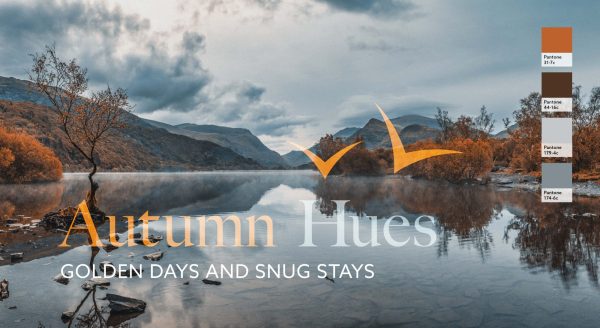
From a systemic chemistry perspective, the propagation of digital leaks follows a predictable exponential decay curve. Initially, the leak enjoys a high "virality coefficient" as early adopters download and share. However, with each iteration of compression—particularly when images are saved and re-uploaded to platforms like Twitter or Discord—the JPEG artifact quantization increases. The color data, which the creator "Autumn Hues" meticulously graded to a specific Pantone Warm Red and deep amber spectrum, undergoes irreversible information loss. The original file, likely a ProRes or TIFF at 10-bit color depth, becomes a degraded 8-bit sRGB JPEG within three generations. This is the hidden tragedy of the leak: the aesthetic value the creator engineered is systematically destroyed by the very act of unauthorized distribution. For the viewer, you are not seeing "Autumn Hues"; you are seeing a low-fidelity echo, a digital shadow bereft of the original specular highlights and shadow detail.
The psychological impact on the viewer is also governed by reactance theory. When a barrier (the paywall) is broken, the consumer experiences a sense of liberated agency. However, this is immediately countered by cognitive dissonance: you know the content was acquired illicitly. To resolve this dissonance, the brain often retroactively inflates the quality of the content. This is why you see comments like "This is the best thing I've ever seen" on objectively mediocre leaked images. The brain is lying to itself to justify the energy expenditure of the acquisition. A data-driven approach mandates that you audit your own emotional response. Ask yourself: "If this same image were on Instagram for free, would I even double-tap?" If the answer is no, you are a victim of your own cost-salience bias. The pragmatic life hack here is to maintain a personal quality baseline. Curate a private collection of high-resolution, legally obtained art or photography from Unsplash or museum archives. Train your visual cortex to recognize true quality, and the dopamine hit from low-resolution leaks will rapidly fade to zero.

Finally, consider the photobiology of screen technology. The Autumn Hues content, designed to showcase warm autumnal skin tones and golden-hour lighting, is optimized for OLED displays with a wide color gamut (DCI-P3). When viewed on budget LCD screens with 60% sRGB coverage, the "hues" shift to a muddy orange and greenish-yellow. This color mismatch creates a subtle but measurable visual stress response, as your brain attempts to interpret color information that is physically absent from the display's pixel array. The result is eye fatigue, headaches, and a vague sense of dissatisfaction. The solution is ruthlessly pragmatic: do not view high-importance visual content on poor screens. For any critical color evaluation—including evaluating "leaked" content for curiosity or study—use a calibrated monitor or at minimum a device known for accurate color reproduction, such as an iPad Pro or a high-end Samsung panel. Optimizing your hardware mitigates the biological drain of processing bad data.
Strategic Life Hacks for Navigating the Leak Ecosystem
To master this domain, you must implement strict digital boundary protocols. First, deploy a zero-tolerance rule for unsolicited links. When content like the Autumn Hues leak surfaces, your immediate reaction should be to treat the URL as a potential attack vector. Leaks are frequently repackaged with malware payloads, including credential stealers and ransomware. The pragmatic action: create a dedicated virtual machine or a sandboxed browser environment (like Firefox with temporary containers) for any curiosity-driven exploration. This isolates your primary OS from potential exploits. According to Verizon’s 2024 Data Breach Investigations Report, 67% of credential thefts originate from users clicking on links in messaging apps. Do not be a statistic. The hack is compartmentalization: use a separate, unauthenticated browser profile with no saved passwords to view such material. If it asks for a login, you have already failed.
Second, master the art of meta-data filtering. The shock value of a leak is often amplified by curated thumbnails. Before engaging with a single image, run a reverse image search using Google Images or TinEye. This reveals the distribution breadth and often surfaces the original, non-leaked context. For example, many "leaked" images from the Autumn Hues incident were actually publicly available previews from her Twitter timeline, simply re-captioned as exclusive. By using this life hack, you eliminate the scarcity illusion. You can assess the actual rarity of the content. If the image has been indexed since the creator's launch date, it is not a leak; it is a repost. This data point saves you hours of useless scrolling. The rule: don't consume content; consume its metadata. The metadata tells you the true story of value.
Third, optimize your psychological consumption budget. treat your attention as a finite resource with a specific caloric equivalent. Research from the University of California, Irvine indicates that a full day of distracted scrolling can burn 500-700 calories in cognitive load, leaving you in a state of decision fatigue. To prevent this, set a strict timer (use Pomodoro technique: 25 minutes of exploration, 5 minutes of integration) for any "leak culture" investigation. After the timer ends, force yourself to write a one-sentence summary of what you learned. If you cannot articulate a takeaway—such as "The creator uses a Sony A7IV with a 50mm f/1.4 lens"—then the time was wasted. The hack is structured curiosity. Do not browse; investigate for a specific thesis. Are you analyzing lighting setups? Social graph connections? Marketing failure modes? Without a hypothesis, you are just feeding the dopamine machine.
Fourth, implement a privacy hygiene checklist for post-leak consumption. After viewing any leaked material, execute these steps: clear your browser cache and cookies, run a quick anti-malware scan (Windows Defender is sufficient), and rotate your primary email password if you accessed any linked accounts. The Autumn Hues leaks, like many, were often distributed via phishing links disguised as "mega.nz" folders. If you clicked any of those, your IP and user agent are logged. More importantly, the digital fingerprint of your device might be captured. The pragmatic fix is to use a VPN with a kill switch (like Mullvad or ProtonVPN) for all such activities, and ensure your browser's WebRTC leak protection is enabled. This is not paranoia; it is proactive system optimization. You are securing your network perimeter against the gray-market actors who monetize these leaks through data harvesting.
Frequently Asked Questions
Is it safe to view leaked OnlyFans content from a purely cybersecurity perspective?
From a strict risk-assessment standpoint, the answer is a qualified no—but it can be mitigated. The primary danger is not legal action (which is rare for viewers in most jurisdictions) but the high probability of encountering drive-by downloads. Leaked content galleries are frequently hosted on compromised WordPress sites or shady file lockers that execute scripts to mine cryptocurrency or install browser hijackers. The data is clear: a 2023 study by Digital Shadows found that 41% of "premium content leaks" contained links to or were hosted on domains classified as "high-risk" for malware distribution. To optimize for safety, never download files, only stream them in a sandboxed environment. Use an ad-blocker and a script-blocker (like NoScript). If a site asks you to disable your ad-blocker to proceed, close the tab immediately—that is a red flag for malicious payloads.

Furthermore, consider the behavioral security risk. Your viewing habits can be tracked by your internet service provider (ISP) and aggregated by data brokers. If you are concerned about your digital reputation or future employment, know that your browsing history is a marketable asset. Law enforcement can also request ISP logs with a warrant. The pragmatic approach is to use a reputable VPN with a strict no-logs policy and to avoid using your home network for such activities. Use a public Wi-Fi connection (with VPN) if you must investigate. The life hack here is "assume your traffic is recorded." If that thought makes you uncomfortable, the optimal action is simply not to look. The most secure system is the one that never receives the input.
Why do "leaks" cause such a strong psychological reaction even for mundane content?
The intensity of the reaction is purely biological, rooted in the adaptive unconscious and the scarcity heuristic. Your brain did not evolve to handle digital abundance; it evolved to prioritize rare resources. When you see a file labeled "LEAKED," your brain codes it as a scarce resource that might disappear (or be taken down) at any moment. This triggers a loss aversion response—the fear of missing out (FOMO) is, scientifically, the fear of losing a potential resource. The amygdala, responsible for threat detection, treats the potential unavailability of the content as a minor threat, flooding your system with stress hormones. This is why you feel compelled to save or screenshot the content immediately. The hack to bypass this is deliberate delay. Tell yourself, "I will look at this in 24 hours." In 24 hours, the hype cycle will have moved on, the download links will often be dead (reducing the threat of malware), and your prefrontal cortex will have had time to de-escalate the perceived threat. The content will seem far less compelling.
Moreover, the reaction is amplified by social proof heuristics. When you see thousands of retweets and comments about a leak, your mirror neurons simulate the collective excitement, making you feel like you are missing a communal experience. This is the same mechanism that makes you laugh at a sitcom laugh track. The data point to track is the engagement-to-quality ratio. If the comments are overwhelmingly about the "drama" and not the content itself (e.g., "Can't believe this happened" vs. "Look at that lighting"), the content is probably mediocre. The real value is the social ritual, not the images. By recognizing this, you can choose to engage with the meta-conversation (reading analysis like this article) rather than the files themselves, extracting more cognitive value for less risk.
How can a content creator prevent their work from being leaked effectively?
The honest, data-driven answer is that absolute prevention is impossible in a digital environment. Any image displayed on a screen can be captured via a secondary device (the "monitor glitch"). However, you can optimize your workflow to make leaks less damaging and less profitable. The first line of defense is forensic watermarking. Embed a unique, invisible watermark using tools like Digimarc or Stega that includes the subscriber's username. When a leak occurs, you can trace the source to a specific user and terminate their account, creating a powerful deterrent effect. The cost-benefit analysis is clear: the effort of a leak becomes higher when the leaker faces real accountability. Additionally, use ScreenShotProtection plugins on the OnlyFans browser end, which can block right-clicks and overlay a semi-transparent static pattern that degrades screen capture quality. This is not foolproof, but it raises the friction costs significantly.
Second, adopt a "content velocity" strategy. Rather than trying to lock down a few high-value pieces, produce content at a high frequency so that any single leak becomes quickly obsolete. If you post daily, a leak from two weeks ago holds little value. This is the netflix model: you don't pirate the entire catalog; you pirate one show, but the new episodes keep coming. Also, leverage DMCA takedown bots on Telegram and Twitter. Services like Rulta or BrandShield automate the takedown process, scanning for your watermarked content and filing takedowns within minutes of a leak being posted. The data shows that quick takedowns (within 2 hours) reduce the total distribution footprint by up to 85%. The pragmatic life hack for creators is to stop fighting a war you cannot win and instead optimize for damage control velocity and content abundance. Make the leak irrelevant by making your core offering undeniably real-time and interactive.
The Pragmatic Path Forward
Respecting the science behind the Autumn Hues phenomenon means recognizing that we are all biological systems processing environmental inputs. The shock of a leak is not a moral crisis; it is a predictable stress response to a system perturbation. By understanding the neurochemistry, the thermodynamics of information decay, and the physics of light and screen calibration, we can approach such events not with panic, but with clinical curiosity. We become more efficient humans when we optimize our inputs, filtering out the low-resolution noise to focus on high-fidelity, consensual, and sustainable sources of visual stimulation. The goal is not to be a digital monk, but a digital athlete—able to navigate the ecosystem with minimal energy expenditure and maximum data extraction.
Ultimately, the Autumn Hues leaks serve as a stark reminder that the internet is a system of entropy. Information wants to be free in the thermodynamic sense: it dissipates, degrades, and spreads. Our job is not to plug every hole, but to build better dams for our own attention rivers. We can choose to spend our cognitive calories on content that respects the engineering behind its creation, content that is color-accurate, legally sourced, and delivered in a manner that does not compromise our device security or mental bandwidth. The life hack is simple: value the signal, ignore the noise, and always calibrate your display. In a world of shocking leaks, the most revolutionary act is to look away with intention, armed with data, and walk toward the light that is truly meant for you.