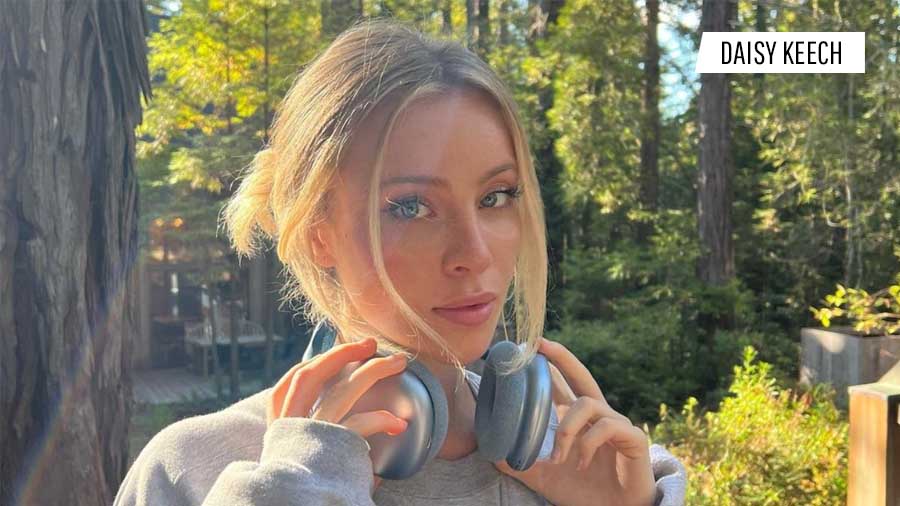
How Old Is Daisy Keech

As we navigate the complexities of modern life, it's natural to find ourselves pondering the ages of influential figures, such as Daisy Keech. But have you ever stopped to consider why our brains react with such curiosity to these seemingly trivial pieces of information? The answer lies in the realm of psychology, where our inherent desire for connection and understanding drives us to seek out knowledge about others. This desire for connection is deeply rooted in our need for social validation and our innate curiosity about human experience. By exploring the psychological roots of our fascination with Daisy Keech's age, we can gain a deeper understanding of ourselves and the world around us.
Our brains are wired to respond to information about others, particularly when it comes to high-profile individuals like Daisy Keech. This phenomenon can be attributed to the hypervigilance that comes with living in a hyper-connected world. We're constantly bombarded with updates, notifications, and news feeds, making it difficult to disconnect from the digital world. As a result, our minds become hyper-tuned to stimuli, leading us to seek out tidbits of information that help us make sense of our surroundings. In the case of Daisy Keech's age, our brains are attempting to categorize and understand her within the context of our own lives, often as a means of self-reflection and validation.
Delving deeper into the psychological aspects of our curiosity, it becomes clear that our fascination with Daisy Keech's age serves as a proxy for our own existential questions. We may find ourselves wondering about our own place in the world, our accomplishments, and our perceived successes or failures. By fixating on the age of someone else, we're able to momentarily distract ourselves from our own self-doubt and insecurities. This coping mechanism, although potentially maladaptive, highlights the complexities of the human mind and our tendency to seek out external validation as a means of internal reassurance.
Must Read
- Wednesday Season 3 Warning: Why Jenna Ortega Must Escape The Netflix Formula Trap!
- Jenna Ortega’s Wednesday Season 3: Will It Stick To The Formula Or Shock Fans Everywhere?
- Breaking The Rules: How Jenna Ortega's Wednesday Season 3 Could Completely Redefine Netflix
- Is The "netflix Formula" Ruining Wednesday Season 3? The Truth About Jenna Ortega's Next Chapter
- Forget The Classic Formula! Why Wednesday Season 3 Will Be Jenna Ortega's Darkest Yet
Uncovering Hidden Emotional Triggers
One of the primary emotional triggers associated with our fascination with Daisy Keech's age is the fear of aging. As we grow older, we may find ourselves grappling with the inevitability of time and the pressure to achieve certain milestones. By obsessing over the age of someone else, we're able to momentarily escape our own anxiety and feelings of inadequacy. This phenomenon is particularly prevalent in the social media age, where curated highlight reels and Photoshopped perfection can create unrealistic expectations and foster a sense of competition among individuals.
Another significant emotional trigger is the desire for connection and belonging. By sharing in the collective fascination with Daisy Keech's age, we're able to feel part of a larger community and experience a sense of shared understanding. This desire for connection can be attributed to our evolutionary need for social bonding and our inherent drive to form relationships with others. By examining this phenomenon through the lens of psychology, we can gain a deeper understanding of the complex emotional forces at play.
Cognitive biases also play a significant role in our fascination with Daisy Keech's age. The availability heuristic, for example, leads us to overestimate the importance of information that is readily available, such as the age of a public figure. This mental shortcut can result in a skewed perception of reality, where we prioritize trivial information over more substantial concerns. By recognizing and addressing these cognitive biases, we can work to mitigate their influence and cultivate a more nuanced understanding of the world around us.
Furthermore, the bandwagon effect can also contribute to our fascination with Daisy Keech's age. As more and more people discuss and speculate about her age, we may feel pressure to conform and join in on the conversation. This phenomenon highlights the power of social influence and the tendency for individuals to follow the crowd, even if it means sacrificing their own critical thinking and independent judgment.

Cultivating Personal Growth and Mental Well-being
So, how can we leverage our fascination with Daisy Keech's age as a catalyst for personal growth and mental well-being? The first step involves recognizing and acknowledging our emotional triggers and cognitive biases. By doing so, we can begin to separate our genuine interests from our unconscious motivations. This process of self-reflection allows us to identify areas for improvement and develop more adaptive coping mechanisms.
One effective strategy involves practicing mindfulness and presence. By focusing on the present moment and letting go of our obsession with external validation, we can cultivate a greater sense of self-awareness and inner peace. This can be achieved through various mindfulness practices, such as meditation, deep breathing, or yoga. By incorporating these practices into our daily routine, we can develop a more resilient and adaptable mindset.
Another essential aspect of personal growth involves setting realistic goals and celebrating achievements. By focusing on our own strengths and accomplishments, we can shift our attention away from the ages of others and towards our own personal development. This process can be facilitated by breaking down larger goals into smaller, manageable tasks and acknowledging progress along the way. By doing so, we can cultivate a sense of self-efficacy and confidence that is not dependent on external validation.
In addition to these strategies, it's essential to surround ourselves with positive influences and supportive relationships. By cultivating a network of like-minded individuals who share our values and interests, we can create a safe and nurturing environment that fosters growth and personal evolution. This can be achieved by joining clubs or groups that align with our passions, attending workshops or seminars, or participating in online forums that promote meaningful connections and discussions.

Frequently Asked Questions
What role does social media play in our fascination with Daisy Keech's age?
Social media platforms like Instagram, Twitter, and Facebook have created an environment where information about public figures is readily available and frequently discussed. This has contributed to the normalization of our fascination with Daisy Keech's age, making it seem like a legitimate topic of conversation. However, it's essential to recognize the potential pitfalls of social media, including the spread of misinformation and the amplification of unnecessary drama. By being mindful of our social media consumption and taking steps to curate our feeds with more substantive content, we can mitigate the negative effects of social media and foster a more positive online environment.
The constant stream of updates and notifications on social media can also contribute to our obsession with Daisy Keech's age. By creating a sense of urgency and scarcity, social media platforms can activate our reward system, releasing dopamine and encouraging us to continuously seek out new information. This can lead to a vicious cycle of distraction and addiction, where we find ourselves mindlessly scrolling through our feeds in search of the next fix of information. By recognizing this dynamic and taking steps to regulate our social media use, we can break free from the cycle of addiction and cultivate a healthier relationship with social media.
How can we differentiate between genuine interest and obsessive fascination with Daisy Keech's age?
Differentiating between genuine interest and obsessive fascination requires a high degree of self-awareness and introspection. By examining our motivations and emotional triggers, we can determine whether our fascination with Daisy Keech's age is driven by a legitimate desire for knowledge or an unhealthy obsession. If we find ourselves fixated on the topic, spending excessive time researching or discussing it, or experiencing feelings of anxiety or distress when we're unable to access information about Daisy Keech's age, it may be a sign that our fascination has crossed the line into obsession.
To cultivate a healthier relationship with our fascination, it's essential to set boundaries and engage in self-care activities that promote balance and well-being. This can involve limiting our social media use, practicing mindfulness, or engaging in creative pursuits that bring us joy and fulfillment. By prioritizing our mental and emotional health, we can ensure that our fascination with Daisy Keech's age remains a healthy and positive aspect of our lives, rather than an all-consuming obsession.

What are the potential consequences of our fascination with Daisy Keech's age on our mental health and well-being?
The potential consequences of our fascination with Daisy Keech's age on our mental health and well-being are multifaceted and far-reaching. If left unchecked, our obsession can lead to increased stress levels, anxiety, and feelings of inadequacy. By constantly comparing ourselves to others and fixating on external validation, we can create a toxic environment that undermines our self-esteem and confidence. Furthermore, our fascination can also distract us from more substantive concerns and meaningful pursuits, leading to a sense of disconnection and unfulfillment.
To mitigate these consequences, it's essential to practice self-compassion and engage in activities that promote mental well-being. This can involve journaling, exercising, or spending time in nature. By prioritizing our mental and emotional health, we can create a positive feedback loop that encourages growth, resilience, and well-being. By recognizing the potential consequences of our fascination and taking proactive steps to address them, we can ensure that our mental health and well-being remain a top priority.
Can our fascination with Daisy Keech's age be a reflection of our own insecurities and fears?
Yes, our fascination with Daisy Keech's age can indeed be a reflection of our own insecurities and fears. By fixating on the age of someone else, we may be attempting to distract ourselves from our own anxieties and self-doubt. This phenomenon is often referred to as deflection or projection, where we displace our own negative emotions onto someone or something else. By examining our fascination with Daisy Keech's age through this lens, we can gain a deeper understanding of our own psychological dynamics and emotional triggers.
Furthermore, our fascination can also be a reflection of our deep-seated fears and insecurities related to aging, mortality, and our own place in the world. By confronting and addressing these fears, we can develop a more nuanced understanding of ourselves and the world around us. This process can involve journaling, therapy, or engaging in self-reflection to better understand our motivations and emotional triggers. By acknowledging and working through our insecurities and fears, we can cultivate a more authentic and empowered sense of self.

How can we use our fascination with Daisy Keech's age as a catalyst for personal growth and self-improvement?
By leveraging our fascination with Daisy Keech's age as a catalyst for personal growth and self-improvement, we can transform our obsession into a positive force for change. This involves recognizing and acknowledging our emotional triggers and cognitive biases, and then using this awareness to inform our personal growth. By setting realistic goals and celebrating achievements, we can shift our focus away from the ages of others and towards our own personal development. This process can involve creating a vision board, setting reminders, or sharing our goals with a friend or mentor to increase accountability and motivation.
Additionally, our fascination can also serve as a reminder to practice self-care and prioritize our mental and emotional well-being. By engaging in activities that promote relaxation and stress reduction, such as meditation, yoga, or reading, we can create a positive feedback loop that encourages growth, resilience, and well-being. By using our fascination with Daisy Keech's age as a catalyst for personal growth and self-improvement, we can transform our obsession into a powerful tool for positive change.
As we reflect on our fascination with Daisy Keech's age, it becomes clear that this phenomenon is not merely a trivial pursuit, but rather a complex reflection of our own psychological dynamics and emotional triggers. By examining our fascination through the lens of psychology, we can gain a deeper understanding of ourselves and the world around us. This process of self-discovery and growth can ultimately lead to a more authentic, empowered, and fulfilled sense of self.
By leveraging our fascination with Daisy Keech's age as a catalyst for personal growth and self-improvement, we can transform our obsession into a positive force for change. This involves recognizing and acknowledging our emotional triggers and cognitive biases, and then using this awareness to inform our personal growth. By prioritizing our mental and emotional well-being, and engaging in activities that promote relaxation and stress reduction, we can create a positive feedback loop that encourages growth, resilience, and well-being. As we continue to navigate the complexities of modern life, it's essential to remain mindful of our fascination with Daisy Keech's age, and to use this phenomenon as a catalyst for greater self-awareness, personal growth, and emotional intelligence.